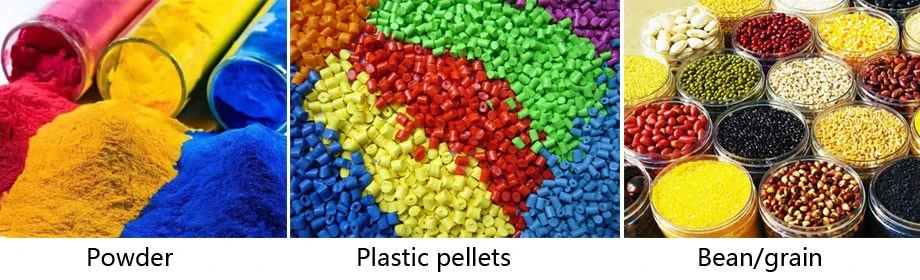
As a type of plastic color mixer, the rotary color mixer primarily relies on mechanical action. It enhances the mixing effect by rotating the mixing barrel 360 degrees, allowing for the blending of materials of different colors or types to achieve a uniform mixture. The materials that are suitable for mixing with a rotary color mixer include, but are not limited to, the following:
Plastic Raw Materials: Rotary color mixers are widely used in the plastic industry, particularly for plastic modification. By mixing plastic particles of different types and properties, the performance and characteristics of the plastics can be enhanced. For example, by mixing PP (polypropylene) and PE (polyethylene) plastics, a composite material with high toughness and a high heat deformation temperature can be produced, which expands the application range of both PP and PE. Additionally, the mixer can be used to blend plastic particles with masterbatches, allowing for more effective mixing of new and recycled materials.
Rubber Materials: In the rubber processing industry, rotary color mixers are used to mix rubber particles with materials such as resins, catalysts, and fillers to create composite materials with improved performance. For example, when manufacturing a plastic runway, rubber particles are mixed with polyurethane resin, along with appropriate amounts of catalysts and fillers, to adjust the hardness and durability of the material.
Composite Materials: Rotary color mixers can also be used to prepare composite materials. By mixing plastic particles of various types and properties with other materials such as carbon fiber and glass fiber, composite materials with high strength, rigidity, and light weight can be produced. These materials are suitable for use in industries such as automotive and aerospace.
Powdered or Granular Materials: In addition to the above materials, rotary color mixers are also effective for mixing powdered or granular substances, such as fertilizers, coal powder, cement, and desiccants. These materials tumble continuously in the mixing barrel as it rotates, ensuring uniform mixing.
When selecting a rotary color mixer, factors such as the nature of the material, the mixing requirements, and production efficiency should be considered in order to choose the most suitable model and specifications. Furthermore, when operating a rotary color mixer, it is important to follow specific operating procedures and safety precautions to ensure the machine operates safely, stably, and achieves the desired mixing results.
In general, rotary color mixers are widely used in the plastics, rubber, composite materials, and powdered or granular materials industries. Their versatility and efficiency make them indispensable equipment in these fields.