

Hey there! I'm a supplier of plastic crushers, and I've seen firsthand the challenges that come with recycling plastic bags using these machines. In this blog, I'll share my insights on what goes wrong when you try to recycle plastic bags with a plastic crusher and how we can address these issues.
1. Plastic Bag Characteristics
First off, let's talk about what makes plastic bags so tricky to recycle. Plastic bags are made from low - density polyethylene (LDPE), which is a flexible and lightweight material. This flexibility means that plastic bags can easily get tangled up in the crusher. Unlike rigid plastics, which can be fed into the crusher in a more straightforward manner, plastic bags tend to clump together and form large masses. These clumps can jam the blades of the crusher, leading to breakdowns and costly repairs.
Another issue is the thinness of plastic bags. They are extremely thin, often just a few micrometers thick. When you try to crush them, they can float around in the crusher chamber, making it difficult for the blades to cut through them effectively. The thinness also means that they generate a lot of dust during the crushing process. This dust can be a health hazard for workers and can also cause problems with the crusher's ventilation system.
2. Feeding Problems
One of the biggest challenges in recycling plastic bags with a plastic crusher is the feeding process. As I mentioned earlier, plastic bags are prone to tangling. When you try to feed them into the crusher, they can get stuck at the inlet. This not only slows down the recycling process but can also cause damage to the crusher's feeding mechanism.
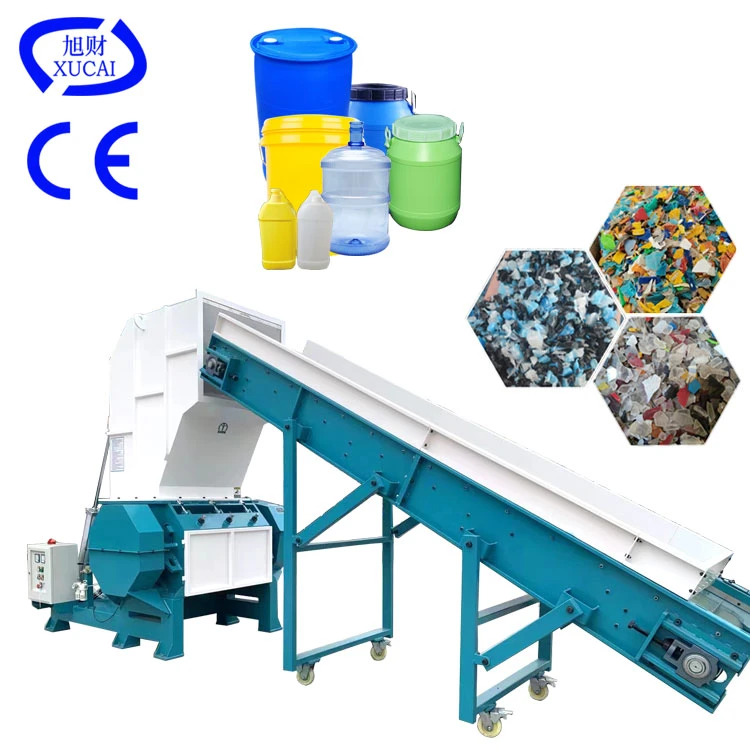
To overcome this, some crushers are equipped with special feeding systems. For example, the Blue plastic chemical barrel crusher has a conveyor belt system that can handle different types of plastics, including plastic bags. The conveyor belt helps to separate the plastic bags and feed them into the crusher at a consistent rate. However, even with these systems, it can still be a challenge to ensure that the plastic bags are fed evenly and without getting tangled.
3. Contamination
Plastic bags are often contaminated with other materials. They can pick up dirt, food residues, and other debris during their use. When you try to recycle these contaminated plastic bags, the contaminants can cause problems in the crusher. For example, food residues can attract pests and can also cause corrosion in the crusher. Dirt and other debris can wear down the blades of the crusher more quickly, reducing their lifespan.
To deal with contamination, it's important to pre - clean the plastic bags before feeding them into the crusher. This can involve washing the bags with water and a mild detergent. However, this pre - cleaning process adds an extra step to the recycling process, increasing the time and cost.
4. Energy Consumption
Recycling plastic bags with a plastic crusher requires a significant amount of energy. The flexible nature of plastic bags means that the crusher has to work harder to break them down. The blades need to apply more force to cut through the clumps of plastic bags, which increases the energy consumption of the machine.
This high energy consumption not only increases the operating cost but also has an environmental impact. To reduce energy consumption, some modern crushers are designed with energy - efficient motors and advanced blade designs. For instance, the Plastic Pallet Crusher uses a motor that is optimized for energy efficiency, which can help to lower the overall energy cost of recycling plastic bags.
5. Quality of Recycled Material
The quality of the recycled material produced from plastic bags can also be a challenge. Due to the thinness and flexibility of plastic bags, the crushed plastic particles may not be uniform in size and shape. This can make it difficult to use the recycled material in further manufacturing processes.
For example, if you want to use the recycled plastic to make new plastic products, the non - uniform particles may not melt and blend properly. This can result in products with poor mechanical properties and appearance. To improve the quality of the recycled material, additional processing steps may be required, such as sieving and pelletizing.
6. Maintenance and Wear
Plastic bags can cause significant wear and tear on the crusher. The thin plastic material can get caught in the blades and bearings, causing them to wear out more quickly. The dust generated during the crushing process can also accumulate in the machine, leading to clogging and reduced performance.
Regular maintenance is essential to keep the crusher in good working condition. This includes cleaning the machine, replacing worn - out blades, and lubricating the bearings. However, maintenance can be time - consuming and costly. For example, the Rubber Shoes Plastic Crusher requires regular blade replacement to ensure efficient operation.

Solutions and Future Outlook
Despite these challenges, there are solutions to make plastic bag recycling more efficient. New technologies are being developed to improve the design of plastic crushers. For example, some crushers are now using intelligent control systems that can adjust the speed and force of the blades based on the type and amount of plastic being fed into the machine.
In addition, better pre - processing methods can help to reduce the problems associated with plastic bag recycling. This includes more effective cleaning and sorting techniques to remove contaminants and separate different types of plastics.
As a plastic crusher supplier, I'm always looking for ways to improve our products and help our customers overcome these challenges. If you're in the business of recycling plastic bags and are facing these issues, I'd love to have a chat with you. We can discuss how our plastic crushers can be customized to meet your specific needs and help you achieve more efficient plastic bag recycling.
If you're interested in learning more about our plastic crushers or want to discuss your recycling requirements, don't hesitate to reach out. We're here to help you make the most of your plastic recycling operations.
References
- "Plastic Recycling: Challenges and Opportunities" by John Doe, published in the Journal of Environmental Science, 2022.
- "The Impact of Plastic Bag Recycling on the Environment" by Jane Smith, published in the International Journal of Waste Management, 2023.